Are Dental Implants Safe? Risks and How They Are Managed

Dental Implants are a well-established treatment, and they are still surgery. Complications can occur, and most are manageable when caught early. The main long-term risk is inflammation of the gum and bone around the Implant, which daily cleaning and regular reviews help prevent.


How Safe Are Dental Implants, and How Is the Risk Reduced?
Safety depends on planning, technique and aftercare. At Stunning Dentistry:
- A CBCT scan maps your bone, nerves and sinus before surgery.
- Implant torque is documented above 35 Ncm at placement, and each Implant's stability is checked before it carries teeth.
- Your case stays in a 10-year open file with milestone reviews.
- Every treatment carries a Lifetime Warranty. The warranty document sets out what is covered.
Questions about this procedure?
What Are the Known Risks and How Are They Managed?
Implants can fail early or late, and the longer-term risk most often discussed is peri-implantitis, inflammation of the gum and bone around the Implant. Each risk has a check.
| Risk | What it is | How it is managed |
|---|---|---|
| Early or late Implant failure | The Implant does not hold, or loses support later | Stability checked before loading, milestone reviews, re-treatment where needed |
| Peri-implantitis | Inflammation of the gum and bone around the Implant | Daily cleaning, regular reviews, early treatment |
| Nerve disturbance (lower jaw) | Surgery close to a nerve; rare and usually temporary | Nerve position planned on CBCT |
| Sinus involvement (upper jaw) | The sinus membrane is breached during surgery | Sinus floor assessed on CBCT, repaired during surgery if needed |
| Prosthetic wear | A loosened screw or a chipped tooth | Adjusted or repaired at review |
Ready to discuss your options?
Who Should Not Get Dental Implants?
Some conditions raise the risk or mean surgery waits:
- Uncontrolled diabetes: with HbA1c above 8%, surgery waits until it is stabilised.
- Active cancer treatment, including chemotherapy and bisphosphonate therapy.
- Severe autoimmune conditions that affect healing.
- Smoking: it raises the risk of failure, so we ask you to stop or reduce before surgery.
- Too little bone: a graft or a different plan may be needed, and your CBCT scan confirms.
Most of these are relative contraindications. With careful management, treatment can still be possible.
Curious about costs and timelines?
How Do Implants Compare to Bridges and Dentures?
Implants are placed in the bone, so they help support it, in exchange for a surgical placement step. Bridges need adjacent teeth to be ground down, and removable Dentures sit on the gums.
| Option | Jawbone | Neighbouring teeth | Upkeep |
|---|---|---|---|
| Dental Implants | Chewing force reaches the bone | Untouched | Brushing and an annual check-up |
| Dental Bridge | No change | Ground down to carry the bridge | Cleaning under the bridge |
| Removable Denture | The jaw can resorb over years | Untouched | Daily removal, relines, replacement |
Want a personalised Treatment Plan?
Specialist-only treatment planning
- Remote file review before travel
No waiting list for eligible cases
- Evidence-led treatment checkpoints
Trip coordinated with care timeline
- 24/7 CRM from your first message to your flight home
Our Partners











Why Us
Good to know
Frequently Asked Questions
Are Dental Implants safe in general?
What are the main risks of Dental Implants?
Who should avoid getting Dental Implants?
How do Implants compare to bridges or Dentures?
See your new smile instantly!

Before & After Results
Clinical Transformation
Successfully treated international patients from around the globe.

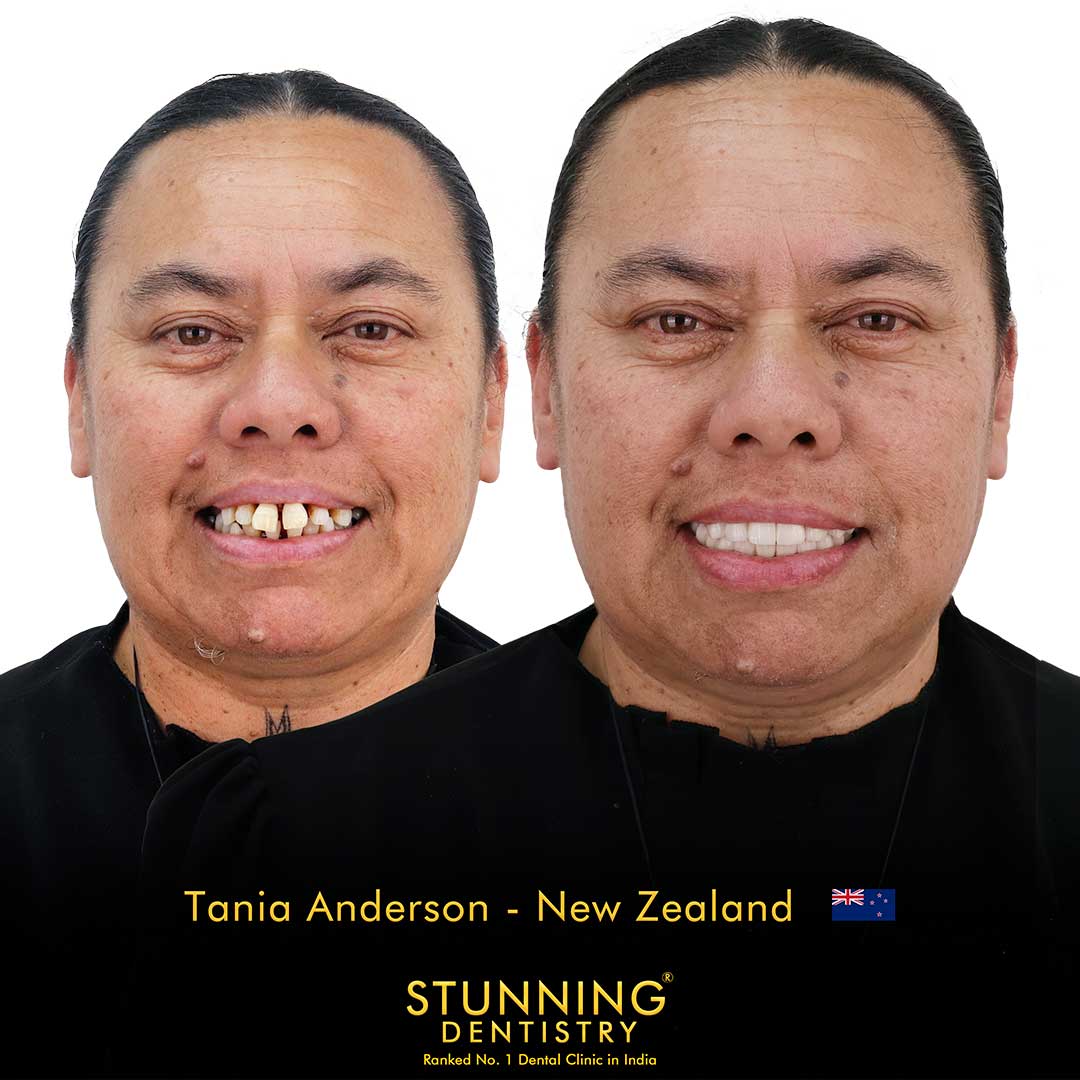
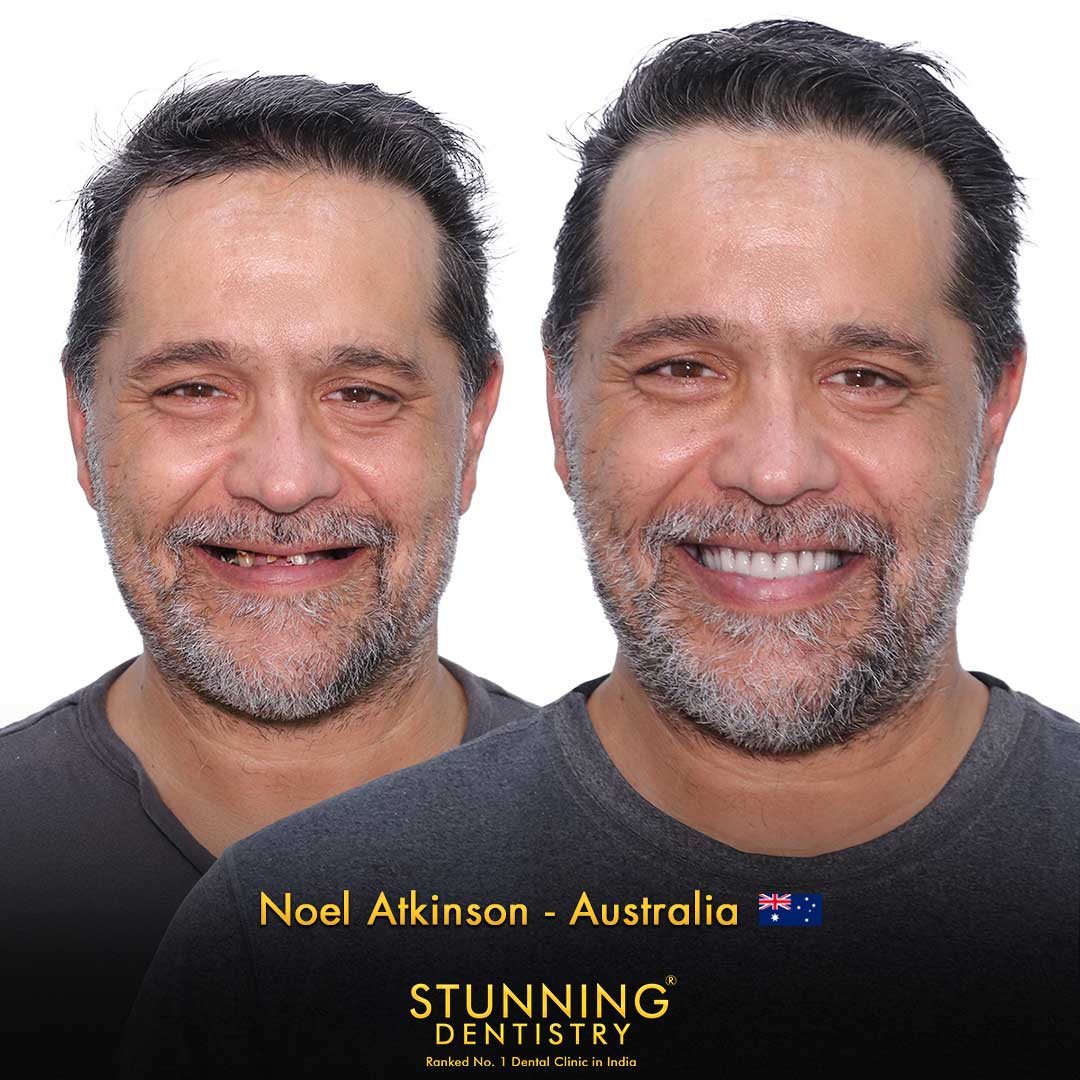

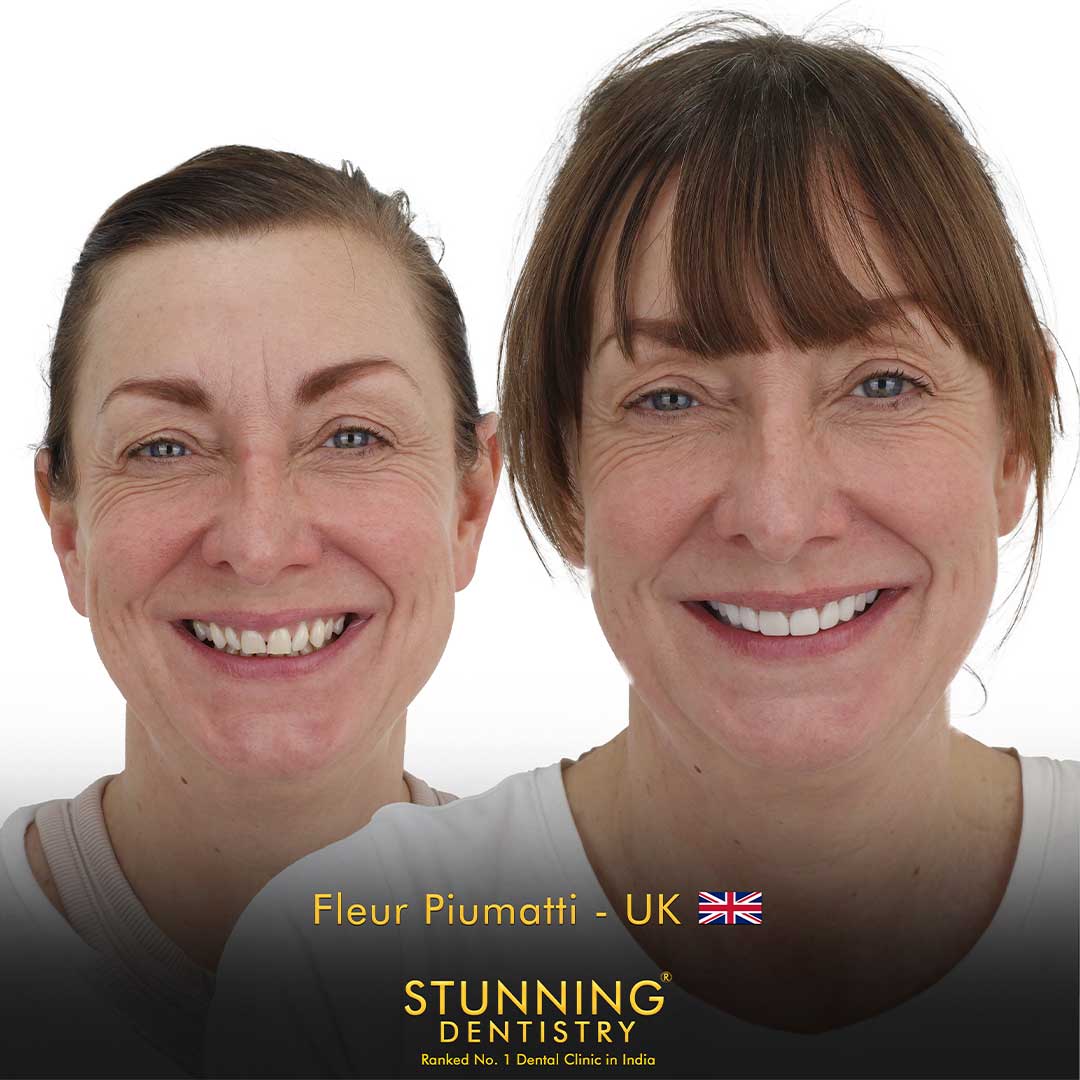
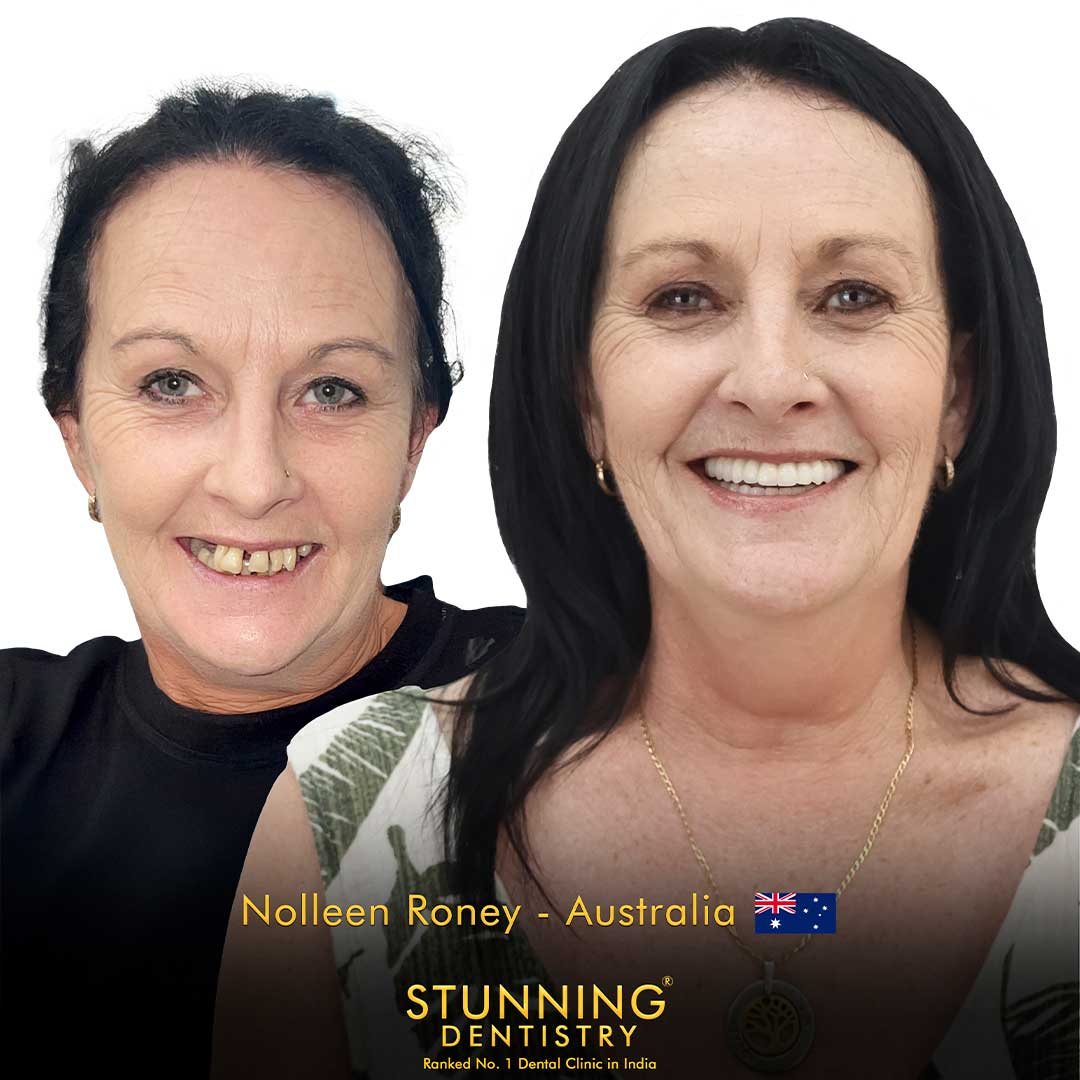

All on 6 Implants
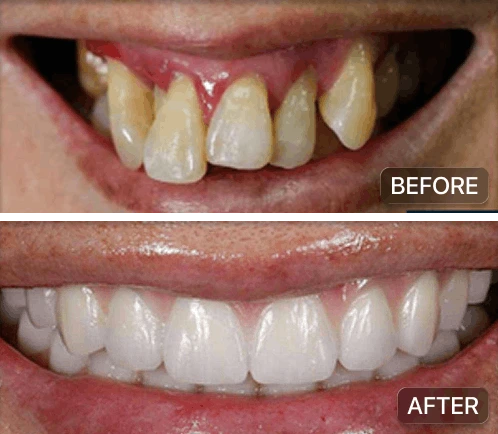
Full Mouth Implants
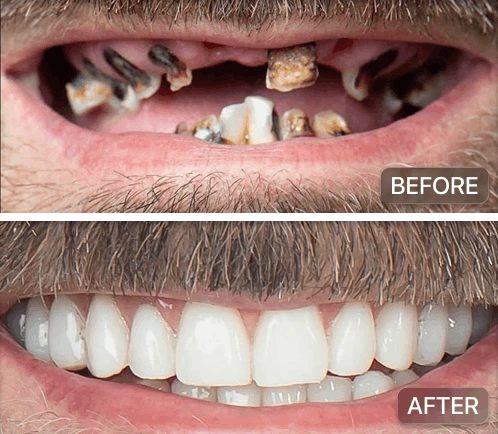
Full Mouth Implants
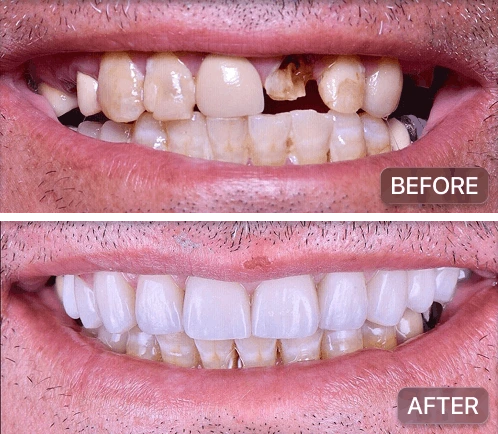
All on 4 Implants
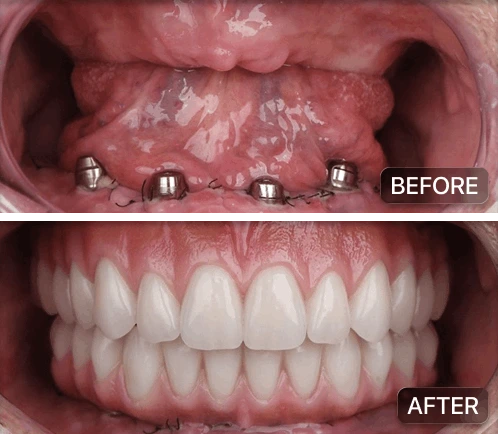
Recognised for patient care
Internationally Recognised
Ranked No. 1 in India, four years in a row.
We won! The Prestigious Patient Service Award
Awarded in recognition of excellence in patient experience