20 Surgical OperatoriesForbes India #1 - 4 Consecutive Years25+ Super-Specialists4.8 Trustpilot - Verified Reviews17+ Speciality DepartmentsStraumann - Nobel Biocare - OsstemLifetime WarrantyAAID - AACD - AAO - BACD - ISO 9001:2015Same-Day TeethAirport Transfer - Hotel - Visa Guidance24 / 7 CRM SupportDr. Priyank Sethi - MDS - PhD - India's #120 Surgical OperatoriesForbes India #1 - 4 Consecutive Years25+ Super-Specialists4.8 Trustpilot - Verified Reviews17+ Speciality DepartmentsStraumann - Nobel Biocare - OsstemLifetime WarrantyAAID - AACD - AAO - BACD - ISO 9001:2015Same-Day TeethAirport Transfer - Hotel - Visa Guidance24 / 7 CRM SupportDr. Priyank Sethi - MDS - PhD - India's #1
Stunning Dentistry

Bone Grafting for Dental Implants — Do You Really Need It?

At Stunning Dentistry, most patients who were told they need bone grafting in Canada can avoid it entirely — through tilted implant protocols, zygomatic implants, or pterygoid implants that use existing dense bone. When grafting is required, it's included in our all-inclusive pricing.

What Is Bone Grafting?

Bone grafting is a surgical procedure that adds volume to areas where bone has resorbed (deteriorated), creating sufficient support for dental implants.

Graft materials vary: autogenous graft (patient's own bone harvested from jaw or hip), allograft (donor bone from tissue bank), xenograft (bovine or porcine bone), synthetic materials (hydroxyapatite, beta-tricalcium phosphate).

Each material has different healing timelines, cost, and clinical indications. Autogenous bone is most predictable but requires a second surgical site. Allografts and xenografts avoid additional surgery but may have slower incorporation.


When Can Bone Grafting Be Avoided?

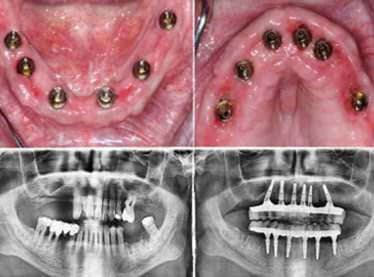
  • All-on-4 tilted implant protocol: posterior implants are tilted 30–45° to use available bone, bypassing areas of atrophy — eliminating need for grafting in ~80% of cases
  • Zygomatic implants: completely bypass maxillary bone, anchoring in cheekbone — no grafting needed regardless of jaw bone loss
  • Pterygoid implants: use dense pterygoid bone at posterior maxilla — posterior grafting avoided
  • Basal implants: engage cortical bone below resorbed alveolar layer — primary implant layer remains stable
  • Strategic implant positioning: careful 3D planning often identifies existing bone that conventional assessment might miss

When Bone Grafting Is Necessary

  • Single implant sites with localized bone deficiency unsuitable for alternative implant protocols
  • Ridge augmentation in aesthetic zones where bone shape affects tooth emergence and appearance
  • Sinus floor elevation (sinus grafting) when upper posterior bone height is <4mm below sinus
  • Vertical ridge augmentation where jaw width is critical for implant support
  • Socket grafting after extraction to preserve ridge volume for later implant placement

Bone Graft Types Comparison

MaterialSourceCostHealing TimePredictability
AutogenousPatient's jaw/hipHighest (extra surgery)4–6 monthsExcellent
AllograftTissue bank (donor)Moderate4–6 monthsGood
XenograftBovine/porcineLower4–6 monthsGood
SyntheticLab-made (TCP, HA)Lowest6–9 monthsFair–Good

Cost and Timeline at Stunning Dentistry

Bone grafting when required is included in our all-inclusive pricing — no additional charge.

Major bone grafting adds 4–6 months healing before implant placement (reduces timeline at SD but extends overall treatment).

Socket grafting after extraction: implants can often be placed 3–4 months later — middle ground between immediate and major grafting.

Full-arch protocols (All-on-4, zygomatic) are specifically designed to minimise or eliminate grafting — reducing trip count and total treatment timeline.

Your CBCT assessment at initial consultation determines if grafting is truly necessary vs. alternative protocols that avoid it.


Frequently Asked Questions

Why was I told I need bone grafting in Canada but might not at Stunning Dentistry?

Different surgical philosophies. Some Canadian clinics routinely recommend grafting as safer/more predictable. At SD, Dr. Sethi uses tilted implants, zygomatic/pterygoid protocols, and basal implants to avoid grafting when clinically viable. Both approaches are valid — SD's approach emphasizes speed and avoiding multiple surgeries.

Is avoiding bone grafting less safe than doing the graft?

No. Tilted All-on-4 implants have 20+ years of evidence (98.2% success at 18 years). Zygomatic implants have 95–98% success. Basal implants show 95%+ success. When clinically indicated, these alternatives are safe and effective as grafting.

If I have bone grafting, can I still complete treatment in one trip?

Not immediately. Bone grafts require 4–6 months healing before implants can be safely placed. You would need a second trip after healing. This is why SD emphasizes avoiding grafts — to keep everything within one efficient 7–10 day trip.

What if my local dentist says I need grafting?

Get a second opinion from a specialist experienced in alternative protocols (tilted implants, zygomatic implants). If both opinions suggest grafting is necessary, proceed. If one says yes and another says no, discuss the rationale — one may be using alternative techniques you weren't aware of.